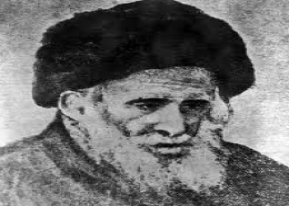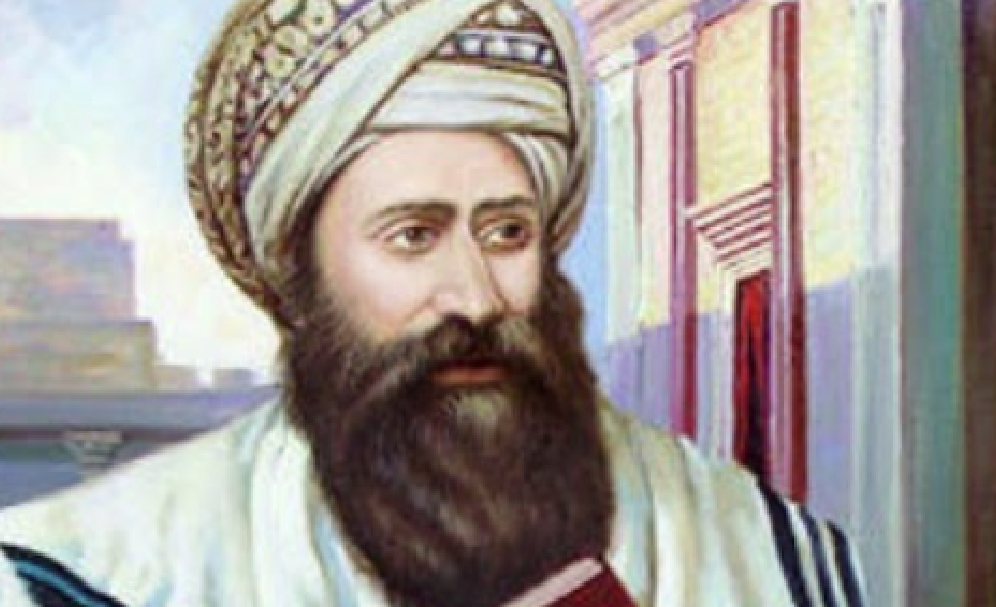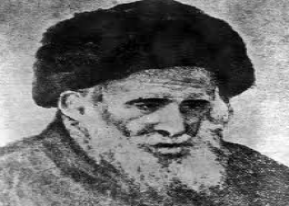
Rabbi Dov Ber – The Maggid of Mezritch

Date of Passing: 19-Kislev. The Mezritcher Maggid was the main leader of the Chassidic movement after the Baal Shem Tov died in 1760. He was chosen as his successor to lead the early movement.

6 min

Breslev Israel staff

Posted on 09.12.25

Born:1700/1704/1710 (?) in Wołyń, Polish-Lithuanian Commonwealth
Died: Mezhirichi , 1772 


Rabbi Dov Ber ben Avraham of Mezeritch (Hebrew: דֹּב בֶּר מִמֶּזְרִיטְשְׁ‎‎), also known as the Maggid of Mezritch, was a disciple of Rabbi Yisrael Baal Shem Tov, the founder of Hasidic Judaism, and was chosen as his successor to lead the early movement. Rabbi Dov Ber is regarded as the first systematic exponent of the mystical philosophy underlying the teachings of the Baal Shem Tov. Through his teaching and leadership, he was the main architect of the movement. He established his base in Mezhirichi (in Wołyń), which moved the center of Hasidism from the Baal Shem Tov’s Medzhybizh (in Podolia), where he focused his attention on raising a close circle of great disciples to spread the movement. After his death, avoiding the unified leadership of the first two generations, this third generation of leadership took their different interpretations and disseminated them across appointed regions of Eastern Europe. Under the inspiration of their teacher, this rapidly spread Hasidism beyond Ukraine, to Poland, Galicia and Russia.


Biography

Dov Ber was born in Lokachi Wołyń (now Volhynia) in 1710, according to the Jewish Encyclopedia, though his year of birth is unknown and some sources place it around 1700. Little is known about him before he became a disciple of the Baal Shem Tov. A Hasidic legend states that, when he was five years old, his family home burst into flames. On hearing his mother weeping, he asked: “Mother, do we have to be so unhappy because we have lost a house?” She replied that she was mourning the family tree, which was destroyed, and is traced to King David by way of Rabbi Yohanan, the sandal-maker and master in the Talmud. The boy replied: “And what does that matter! I shall get you a new family tree which begins with me!”


As a young man, he reportedly lived in great poverty with his wife. One legend relates that when a child was born, they had no money to pay the midwife. His wife complained and the Maggid went outside to “curse” Israel. He went outside and said: “O children of Israel, may abundant blessings come upon you!” When his wife complained a second time, he went outside again and cried: “Let all happiness come to the children of Israel — but they shall give their money to thorn bushes and stones!” The baby was too weak to cry, and the Maggid sighed rather than “cursing”. Immediately the answer came, and a voice said: “You have lost your share in the coming world.” The Maggid replied: “Well, then, the reward has been done away with. Now I can begin to serve in good earnest.”


Visit to Baal Shem Tov

Dov Ber later became an admirer of Rabbi Isaac Luria’s system of Kabbalah, which was becoming popular at that time and was aware of Rabbi Moshe Chaim Luzzatto, whose writings, then only in manuscript, were well known among the Polish mystics of the period. Dov Ber followed the Lurian school, living the life of an ascetic, fasting a great deal, praying intensely, and living in poverty. He is reported to have become a cripple as a result of poor nutrition.


One account has it that on account of his poor health he was persuaded to seek out the Baal Shem Tov for a cure.


He arrived at the Baal Shem Tov’s house, expecting to hear expositions of profound mysteries, but instead was told stories of the latter’s everyday life. Hearing only similar stories at each subsequent visit, Dov Ber decided to return home. Just as he was about to leave, he was summoned again to the Baal Shem Tov’s house. The Baal Shem Tov opened an “Eitz Chaim” of Rabbi Chaim Vital (Rabbi Isaac Luria’s chief disciple), and asked him to explain a certain passage. Rabbi Dov Ber did so to the best of his ability, but the Baal Shem Tov declared that he had not understood the real meaning of the passage. Dov Ber reviewed it once more and insisted that his interpretation was correct. The Baal Shem Tov then proceeded to explain the passage himself. Legend has it that, as he spoke, the darkness suddenly gave way to light, and angels appeared and listened to the Baal Shem Tov’s words. “Your explanations,” he said to Dov Ber, “were correct, but your deductions were thoughts without any soul in them.” This experience persuaded Rabbi Dov Ber to stay with the Baal Shem Tov.


Rabbi Dov Ber is reported to have learned from the Baal Shem Tov to value everyday things and events, and to emphasize the proper attitude with which to study Torah. The mystical philosophy of the Baal Shem Tov rejected the emphasis on mortification of the body in Musar and Kabbalistic traditions, seeing the greater spiritual advantage in transforming the material into a vehicle for holiness, rather than breaking it. This could be achieved by the perception of the omnipresent Divine immanence in all things, from understanding the inner mystical Torah teachings of Hasidic thought. Under the guidance of the Baal Shem Tov, Dov Ber abandoned his ascetic lifestyle and recovered his health, though his left foot remained lame. The Baal Shem Tov said that “before Dov Ber came to me, he was already a pure golden menorah (candelabra). All I needed to do was ignite it.” Regarding his holiness, the Baal Shem Tov also reputedly said that if Dov Ber had not been lame, and had been able to ritually immerse in the mikvah, then he could have been able to bring the Mashiach.


Hasidic Leadership

Immediately after the death of the Baal Shem Tov in 1760, his son Rabbi Tsvi became the next Rebbe. After only a year he gave up this position. Among the disciples of the Baal Shem Tov, two stood out as contenders to succeed him, Dov Ber and Yacov Yoseph of Polonne. Yacov Yoseph would later become the author of the first Hasidic book published (“Toldos Yaacov Yosef” in 1780), one of the most direct records of the teachings of the Baal Shem Tov. By collective consent, the Maggid assumed the leadership of Hasidism. In effect he became the architect of the Hasidic movement and is responsible for its successful dissemination.


Opposition of the Rabbis

Hasidism spread rapidly as a result of Dov Ber’s powerful personality, gaining footholds in Volhynia, Lithuania, and Ukraine. The dissolution of the “Four-Lands” synod in 1764 proved favorable to its spread. The local rabbis were annoyed by the growth of the movement, but could not easily do anything about it. The Gaon of Vilna was the only rabbi whose reputation extended beyond the borders of Lithuania. When Hasidism appeared in Vilna, the Vilna Gaon enacted the first major  excommunication against Hasidism, which was issued on April 11, 1772. The Vilna Gaon believed the movement was antagonistic to Talmudic rabbinism and was suspicious that it was a remnant of the recent Sabbatean movement. 


The Maggid’s pupils Rabbi Menachem Mendel of Vitebsk and Rabbi Shneur Zalman of Liadi tried to visit the Vilna Gaon to bring about reconciliation, but the Vilna Gaon declined to meet them. Lubavitch legend has it that had the Gaon met with these two Rabbis, the Mashiach (Messiah) would have come.


The ban issued at Vilna drew the eyes of the world toward Hasidism. Rabbi Dov Ber ignored the opposition, but it is blamed in part for his death in Mezhirich on December 15, 1772. He is buried in Hanipol.


Views and Teachings

View of God

For the Maggid, God manifests Himself in creation, which is only one aspect of His activity, and which is therefore in reality a self-limitation. Just as God in His goodness limited Himself, and thus descended to the level of the world and man, so it is the duty of the latter to strive to unite with God. The removal of the outer shell of mundane things, or “the ascension of the [divine] spark,” being a recognition of the presence of God in all earthly things, it is the duty of man, should he experience pleasure, to receive it as a divine manifestation, for God is the source of all pleasure.


On the Ecstasy of Prayer

Rabbi Dov Ber’s view of prayer was that it is the purpose of the life on earth to advance until the perfect union with God is attained. Thus the vegetable kingdom serves as food for the animal kingdom, in order that the lower manifestation of divinity, existing in the former, may be developed into a higher one. Man being the highest manifestation has a duty to attain the highest pinnacle in order to be united with God. The way to achieve this, he argued, is through prayer, in which man forgets himself and his surroundings, and concentrates all his thought and feeling upon union with God.


Like the Neo-Platonists, he said that when a man becomes so absorbed in the contemplation of an object that his whole power of thought is concentrated upon one point, his self becomes unified with that point. So prayer in such a state of real ecstasy, effecting a union between God and man, is extremely important, and may even be able to overcome the laws of nature.


Role of the Tzaddik

Rabbi Dov Ber taught that only the tzaddik is able to remove all his thoughts from earthly things and concentrate completely on God. Because of his union with God, he is the connecting link between God and creation, and thus the channel of blessing and mercy. The love that men have for the tzadik provides a path to God. The duty of the ordinary mortal is therefore to love the tzadik and be subservient to him. In this connection Hasidim cite the classical Jewish teaching that Scripture considers one who serves Torah scholars to be cleaving to the Almighty Himself. Many Jews outside Hasidic circles argued that there can be no intermediaries between man and God, and this was one of the reasons that some non-Hasidic rabbis objected to Hasidism . Hasidim believe that the root cause of this disagreement, as of all disagreements on questions of Torah, is lack of diligence in investigation.


May the merit of the tzaddik Rabbi Dov Ber of Mezeritch protect us all. Amen


***

Used with kind permission from Daily Zohar Tzadikim.