
Most of All, He’s Our Father
Rosh Hashanah is the Day of Judgment, but it is also the day we return to a King Who is first and foremost our loving Father. In this beautifully uplifting article, Rabbi Arush inspires us to step into the New Year with confidence, joy, and the life-changing power of unconditional love.

Translated from Rabbi Arush’s feature article in the weekly Chut shel Chessed newsletter. The articles focus on his main message: “Loving others as yourself” and emuna.
These words are for the benefit of the soul of my innocent grandson Shalom ben Asaf and Rivka, a”h, who taught us the immense power of knowing that Hashem is our loving Father.
An Ellul of Love
I met a prominent Rav a few weeks ago, and he told me something that filled me with joy: “Until now, when Elul arrived each year, we spoke about the fear it is supposed to strike in our hearts. As the famous Chassidic line goes, ‘Even the fish in the sea shudder with fear during Elul!’ We worked on doing teshuvah because we were afraid of the upcoming judgment.
“This year, however, the expression, ‘Abba! I know that You love me!’ became popular, and this has changed my perspective entirely. This year, Elul has been not a time of fear but a time of love. It is the most pleasant time of the year, since we are going back to be with Abba, Who loves us and wants to hold us close, Who wants to forgive our misdeeds. Elul has become a totally different experience, and our teshuvah comes from a better, happier place within us. It is a teshuvah born of love, of our Abba’s love!”
I couldn’t have said it better myself, except to add that this concept applies not only to Elul, but also to Rosh Hashanah and the rest of the Aseret Yemei Teshuvah (Ten Days of Repentence). This is not a new concept for me. I wrote about this two years ago, explaining the significance of our Avinu Malkeinu (Our Father, Our King) prayer.
A Term of Immeasurable Significance
The term Malkeinu, like the Name Elokim, evokes an aura of fear and awe. The term Avinu, on the other hand, evokes the presence of a Being filled with unconditional love, a Being Who wants to forgive and bring us close, Who wants to help us and give us everything.
When you address Hashem as your King, you acknowledge that you have no idea whether He will agree to your request, or even if He will bother listening to you. When you address Him as Abba, you acknowledge that He wants only what is good for you and that He does not want to punish or hurt you in the least. You know that He cares about you and wants to help even when you make mistakes. He gives you a path to come back to Him, because He loves you unconditionally. He is proud of the good things you have accomplished, and He is waiting for you to strengthen His warm relationship with you. The term Avinu encompasses all of this, and it is the basis of our faith and trust in Him.
This being the case, this fundamental change from an Elul of fear and trembling to one of love is not my invention. It has been with us over 2,000 years, ever since our Sages instituted the prayer of Avinu Malkeinu for Rosh Hashanah, the day of judgment, when we declare that Hashem is our only King. We preface that declaration by asserting that He is Avinu – our Father.
Avinu Means Someone in Whom We Can Trust
Although Rosh Hashanah is the day when we are being judged and sentenced to life or otherwise, the halachah (Jewish law) demands that we treat it as a Yom Tov. We are supposed to wear our best clothing and eat meals consisting of delicacies. Rebbe Nachman always emphasized the need to feel happy on Rosh Hashanah. But how is it possible to eat and be happy when your life is on the line?
The Kitzur Shulchan Aruch cited the Poskim explaining that we wear our finest garments on Rosh Hashanah to demonstrate that we are confident that Hashem, in His infinite kindness, will judge us favorably. This explains why we make sure to eat delicious foods on this day as well. You might ask, however: “How do we know? How dare we feel so confident, especially when we know how we have behaved all year long?
But that’s exactly the point! This great King is also our Father, and that relationship precedes His being our King. Even if we are guilty, we are sure that He will find a way to treat us with mercy and that He will cushion our judgment with love and fatherly care.
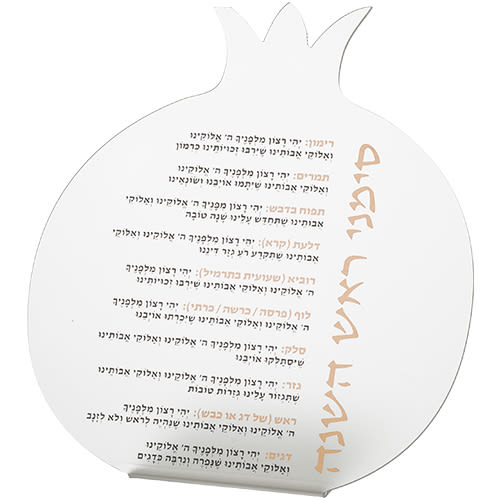
During the evening meal on Rosh Hashanah we eat a number of symbolic foods. What is that supposed to do? Do you think that Hashem will decree good things to happen because we ate some carrots? No, the symbol will not affect Hashem’s decisions. Rather, the symbol is for us to internalize the fact that Hashem loves us and recognizes the good things that we have accomplished. He already wants to put us on a pedestal, cancel any harmful decrees, and vanquish our enemies.
“Abba” Means Three Things
Hashem is our Father, Who wants only to treat us well. That includes pardoning us and forgiving our sins. That is Who He is. We are expected to take these concepts and use them to formulate our own feelings. If we really believe in this, we will have real bitachon in Hashem. Once we know that He is Abba, then of course we trust Him. Abba always wants to do the maximum for His children.
Once we internalize the fact that He is Abba, we will automatically want to do whatever He wants, and we will do it happily and lovingly. Hashem is not a demanding boss or some military guard whom we obey against our will. No, He is Abba. He loves us, and His children want, above all else, to make Him happy.
Moreover, once we internalize the fact that He is Abba, that He is the Father of all Jews, we will realize that His greatest desire is to see that all His children are united and live in peace with each other, even if they are very different from one another.
The halachah tells us that during the Aseres Yemei Teshuvah, our greatest emphasis must be on correcting things we did wrong regarding our relationships with other people. We are taught that Yom Kippur doesn’t help for such sins; we have to fix them up ourselves. If we are in a feud with other Jews, it means that we don’t really understand that Hashem is our Father. If we want Him to forgive us, we must recognize that He is our Father and that our fellow Jews are His children.
The Ultimate Blessing
The root of genuine teshuvah, then, is to recognize that Hashem is Abba. This is true during Elul and through Aseres Yemei Teshuvah. By recognizing that Hashem is Abba, we come to the deepest essence of teshuvah, which means to attach ourselves to Hashem. Being attached to Him means to have absolute bitachon (trust) in Him. It means to be fully committed to fulfilling His Will, and it means to be in total unity with our fellow Jews.
We see all this in Birkat Kohanim (Priestly Blessing by Kohanim). The first pasuk (verse) – Hashem will bless you and protect you – demonstrates our total bitachon in Hashem to provide everything for us and to protect us from all physical and spiritual harm. The second pasuk – Hashem will shine His Face upon you – refers to ratzon, Hashem’s desire for us in response to our total commitment and willingness to fulfill His Will. This is a “shining face” – service with a bright smile, if you will. [For this very reason, the title of my newest sefer is Or Chadash (A New Light).] The third pasuk – He will grant you peace – is, of course, the all-important blessing of peace.
And who gives us these blessings? The kohanim, who are meant to be the agents of kindness and love, representing our love for Hashem and His love for us. In fact, the very term brachah (blessing) alludes to the fact that Hashem is Abba; Hashem blesses us all in the way that a father blesses his children.
How Teshuvah Begins
Dear Jews! The concept of Abba is more than just a nice idea. It is the essence of our faith, the essence of Judaism, and the essence of teshuvah. It is a powerful engine that enables us to feel close to Hashem. When you really know that Hashem is Abba, your entire life is changed.
During these last days before Rosh Hashanah, we are all looking for ways to improve ourselves and change for the better. I want you to understand that real change doesn’t begin with your actions; it begins with your attitude and your faith. The pasuk (Isaiah 55:7) states, “The sinner will leave behind the way he has been thinking.” The navi (prophet) Habakkuk based all the mitzvot on faith, for that is the key to genuine and thorough, lasting change.


Tell us what you think!
Thank you for your comment!
It will be published after approval by the Editor.