
Who Is A Donkey?
Discover why Jewish tradition honors the spiritual heights of earlier generations and how embracing our heritage protects our faith from modern doubts.

אַתֶּם נִצָּבִים הַיּוֹם כֻּלְכֶם לִפְנֵי ד’ אֱלֹקֵיכֶם
רָאשֵׁיכֶם שִׁבְטֵיכֶם זִקְנֵיכֶם
“You are standing today, all of you, before Hashem your Elokim—your heads, your tribes, your elders.” (Devarim 29:9)
Then You Are a Donkey
The Chasam Sofer zt”l was once delivering a shiur to his talmidim. One of them spoke up about an explanation of Rashi and said: “Rashi didn’t understand the Gemara.”
The Chasam Sofer answered him immediately: “You are a donkey.”
The talmidim were taken aback at how sharply he had spoken. He explained himself at once: “If you think Rashi was a man like one of us, then you are like a donkey. Chazal say (Shabbos 112b): ‘If the early ones were like angels, we are like men; and if the early ones were like men, we are like donkeys’. Someone who cannot grasp that the Rishonim, the earlier generations, were on the level of angels, and sees them instead as ordinary people—he is the donkey. He has no sense to tell the difference between something great and something plain.”
Closer to Sinai
At Har Sinai there was an outpouring of wisdom and emunah. The closer a generation stands to that moment, the more of that outpouring it receives.
That is why the generation that actually stood there is called the dor de’ah, the generation of knowledge. They were enormously wise, infused with a unique understanding. And the further the generations move away from Har Sinai, the smaller they grow in intellect and understanding.
Their avodat Hashem stood on a far higher level than ours as well. The Baal Shem Tov once told one of his talmidim: “If you wanted to live with the yirat Shamayim, the fear of Heaven, that the Rishonim had, you would not last a single hour.” And so it was. He let him feel the yirat Shamayim of the Rishonim for one hour, and the talmid’s whole body began to shake with fear and dread. Our neshamot (souls) have descended far from where theirs stood. We simply cannot absorb a yirah – a fear and trepidation – of that magnitude.
Two Grandfathers
A great rav was once traveling with his grandson beside him. Sitting near them was a secular man with his own grandson.
The rav’s grandson looked after his grandfather devotedly. The other grandson was busy with his own affairs.
The man asked the rav: “How do you explain it? Your grandson takes care of you with such devotion, and my grandson doesn’t even notice I’m here.”
The rav answered: “Every person behaves according to what he was taught as a child. My grandson learned that Hashem created Adam HaRishon, and that all the generations came out of him. So I am closer than he is to Adam HaRishon, who was formed by the hands of Hashem. Naturally he honors me and values me. Your grandson learned that man comes from a monkey, and that little by little he keeps advancing. So your grandson feels he is more important than you—because he is further from the monkey and further along.”
Who Is the Advanced One?
There is something to add to the rav’s true words:
Emunah itself brings a person to honor the older generations. Once you believe the world was created with a spiritual purpose, you honor whoever stands higher spiritually.
When people today look back at someone from an earlier generation, they usually feel superior, and sometimes they even look down on him. They picture him as “primitive.” He rode on donkeys. He carried his drinking water home on his shoulders. At night he sat by candlelight. And we have already reached the moon, with every kind of technology serving us. Feelings like these, dim the light that shines out of the Torah and the mesorah built on the generations before us.
But a Yid who believes looks at what a person really is, and what he is here for—the spiritual part, not the physical. He sees the neshamah as the essence, and the body as no more than an outer shell. By that measure, the advanced man is the one whose actions and way of life command more respect. And look at the generation we are living in. People are ruining their middos. They chase after coarse and degraded desires. They are moving away from good middos and from emunah in Hashem.
The older generations stand on a higher level, spiritually and morally. They are the ones who deserve respect and admiration.
A Chain of Three Thousand Years
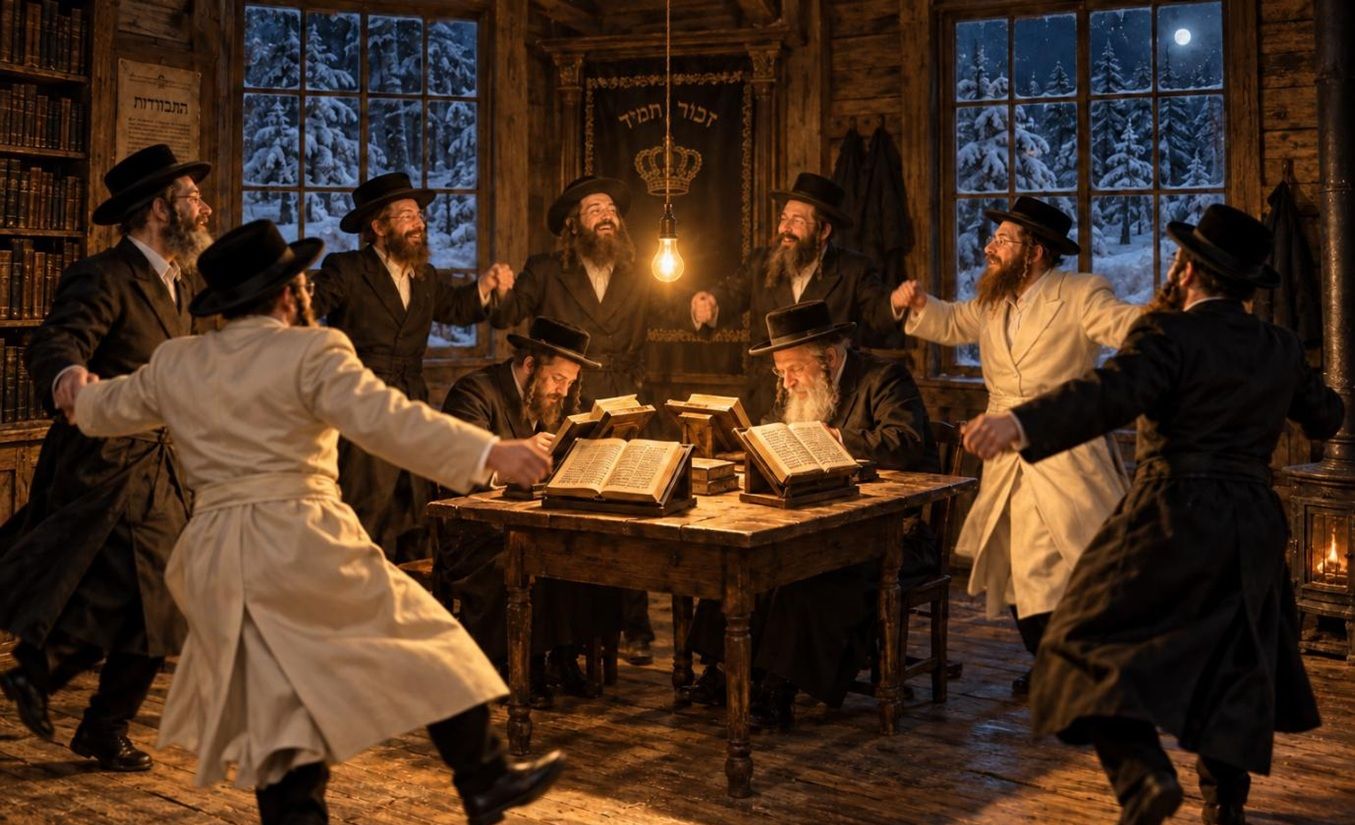
This should awaken every one of us, to walk in the path our grandfathers and grandmothers walked for more than three thousand years—a chain running from Avrohom Avinu down to our own.
In their youth they did not know all the reasons behind the mitzvos. They gave their lives for them anyway, because they saw their elders keeping them and saying that they knew the reasons. And they themselves, after years of learning Torah, came to grasp those reasons and foundations with their own minds.
Millions of Yidden across the generations kept everything without having learned the whole Torah, and kept the mitzvos with joy under the guidance of the rabbanim and talmidei chachomim of their time—many of whom were also ministers of state, outstanding in wealth and wisdom, like the Rambam and the Abarbanel and the other luminaries of the generations, who said: we have learned, and we know the reasons.
Turn Your Heads
On the holy Days of Judgment, the yetzer hara works hard to confuse a person’s head with investigations and doubts in emunah.
That is exactly when a person has to strengthen himself in emunah through kabbolat avot, what he has received from his fathers. He should picture in his mind all the shevatim (tribes) of Yisroel across the four corners of the earth, and all the thousands of his own grandfathers — every one of them gave his life to keep the mitzvot.
This is hinted in our pasuk:
If you want to be atem nitzavim hayom, “you are standing today” [hayom is Rosh Hashanah] and to be kulchem lifnei Hashem Elokeichem, “all of you before Hashem your Elokim,” and not be pulled away from Hashem by the enticements of the yetzer.
Then the eitzah, the advice, is: rosheichem shivteichem zikneichem. Turn your rosh, your head, toward your shivteichem zikneichem, tribes and your elders—the great ones in every corner of the world, in every generation, who gave their lives for Hashem.



9/09/2026
I never thought in this way, this is an awakening for my self.